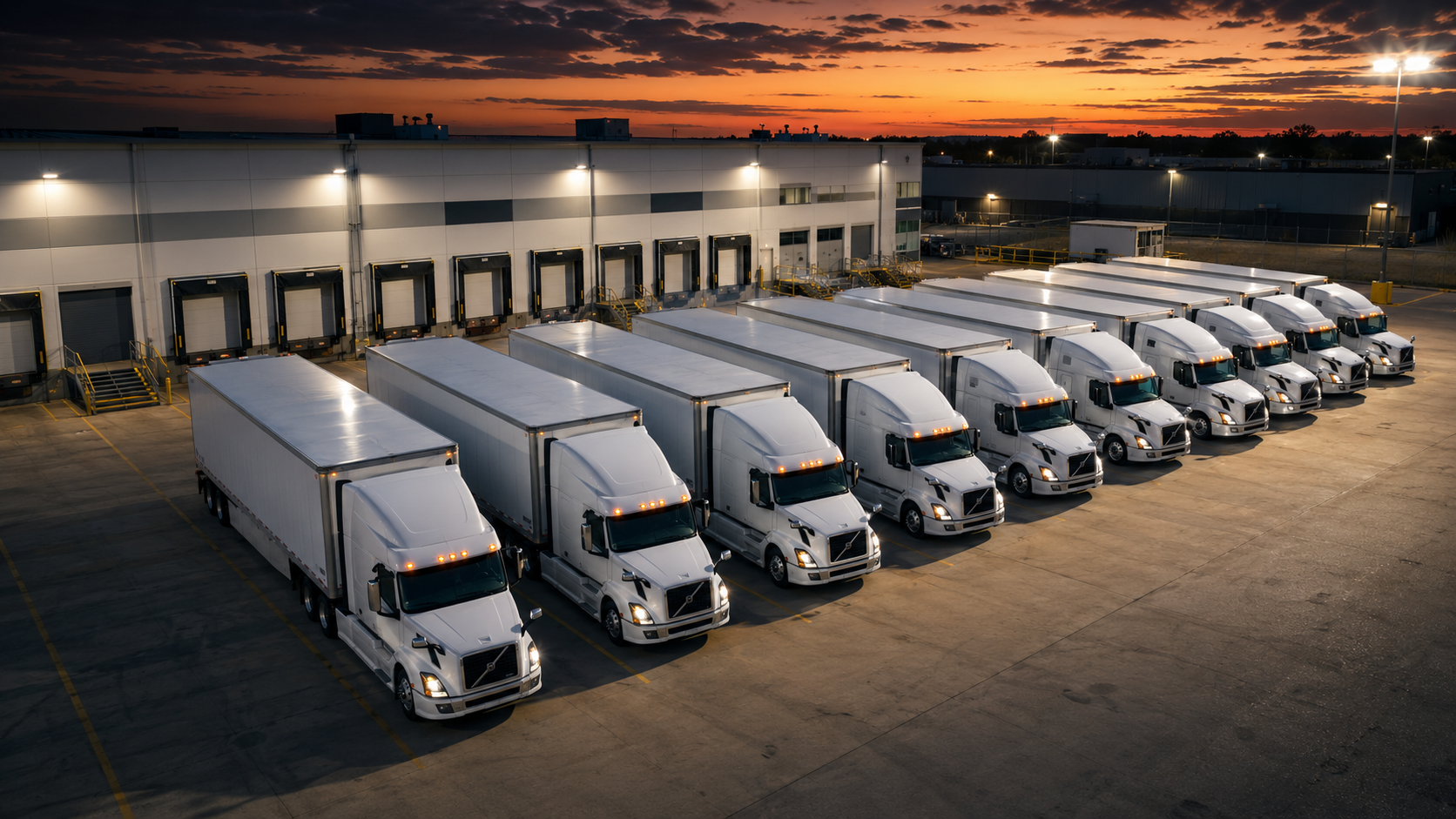
Fleet optimization is the systematic approach to maximizing vehicle performance while minimizing operational costs. Companies implementing comprehensive fleet optimization strategies typically reduce their total fleet costs by 10–30%. (McKinsey)
Step 1: Data-Driven Fleet Assessment and Benchmarking
Before implementing any optimization strategy, you need to understand exactly where you stand.
Establish Your Performance Baseline
Collect and analyze key performance indicators (KPIs):
- Total cost per mile/kilometer
- Fuel efficiency metrics across vehicle types
- Vehicle utilization rates
- Maintenance costs per vehicle
- Downtime percentages
- Driver performance metrics
- Route efficiency measurements
Identify Cost Leakage Points
Common problem areas to analyze:
- Excessive idle time — often accounting for 5–8% of total fuel consumption
- Suboptimal routing — adding unnecessary miles and hours
- Reactive maintenance — causing avoidable breakdowns and expensive repairs
- Vehicle misallocation — using inappropriate vehicles for specific tasks
- Driver behavior issues — harsh acceleration, braking, and speeding
Use industry-wide data (available via FMCSA) to benchmark your performance and establish realistic improvement targets.
Step 2: Implement Strategic Route Optimization
Efficient route planning can reduce miles driven by 5–15%, directly translating to significant fuel savings and increased productivity.
Advanced Route Planning Technologies
Modern route optimization software considers multiple variables simultaneously:
- Traffic patterns and real-time conditions
- Customer time windows and service requirements
- Vehicle capacities and limitations
- Driver hours-of-service restrictions
- Fuel-efficient routing options
- Multi-stop optimization for delivery sequences
Dynamic Dispatch and Load Balancing
Real-time dispatch adjustment capabilities allow for:
- Immediate response to new service requests
- Resequencing stops when delays occur
- Balancing workloads across your fleet
- Reducing empty or partial return trips
Load consolidation can reduce the total number of trips required by 10–20%, potentially reducing fleet size requirements over time.
Step 3: Proactive Maintenance and Vehicle Lifecycle Management
Reactive maintenance is costly — emergency repairs typically cost 3–5 times more than planned maintenance.
Preventive Maintenance Scheduling
A structured preventive maintenance program includes:
- Regular service intervals based on manufacturer recommendations
- Condition-based maintenance triggers using telematics data
- Comprehensive inspection protocols
- Digital maintenance record-keeping
- Parts inventory management
Companies with robust maintenance programs report 25–30% lower repair costs and significantly less downtime.
Strategic Vehicle Replacement Planning
Determine the optimal replacement cycle by analyzing:
- Acquisition costs vs. resale value depreciation curves
- Maintenance cost trends as vehicles age
- Fuel efficiency degradation
- Technological improvements in newer models
- Total cost of ownership calculations
Many organizations discover they can reduce their total vehicle count by 10–15% through improved utilization and scheduling. Most companies achieve payback within 12–18 months through reduced repair costs, extended vehicle lifespans, and improved reliability.
Step 4: Driver Performance Optimization and Technology Integration
Driver behavior can impact fuel economy by up to 30% between the best and worst performers operating identical vehicles.
Driver Training and Incentive Programs
Comprehensive driver development includes:
- Eco-driving techniques training
- Regular performance feedback using telematics data
- Gamification and recognition for top performers
- Financial incentives aligned with efficiency goals
- Continuous education on vehicle technology
Telematics and Fleet Management Technology
A comprehensive technology stack should include:
- Telematics systems — real-time vehicle diagnostics and driver behavior monitoring
- Fleet management software — centralizing operations, maintenance, and compliance data
- Mobile applications — enabling driver communication and documentation
- Fuel management systems — tracking consumption and identifying anomalies
- Electronic logging devices (ELDs) — ensuring hours-of-service compliance
Companies implementing comprehensive driver coaching programs routinely report 5–10% fuel savings and 10–20% reductions in accident rates.
Implementation Roadmap
Successfully implementing these four steps follows this sequence:
- Assessment and goal-setting — establish baseline metrics and define specific targets
- Quick wins identification — implement high-impact, low-effort improvements first
- Technology foundation — deploy necessary systems and tools
- Process development — create standardized procedures and workflows
- Training and change management — prepare your team for new approaches
- Phased implementation — roll out initiatives in logical sequence
- Continuous monitoring — track performance against goals
- Refinement — adjust strategies based on results
Conclusion: The Compound Effect of Optimization
The combined impact of all four steps creates transformative results:
| Improvement Area | Expected Savings |
|---|---|
| Total miles driven (route optimization) | 10–15% reduction |
| Fuel economy (driver performance) | 7–12% improvement |
| Maintenance costs (proactive maintenance) | 15–25% decrease |
| Fleet size (improved utilization) | 5–10% reduction |
| Accidents (safety programs & monitoring) | 20–30% fewer |
For a medium-sized fleet of 50 vehicles, these improvements typically translate to annual savings of $300,000 to $500,000.